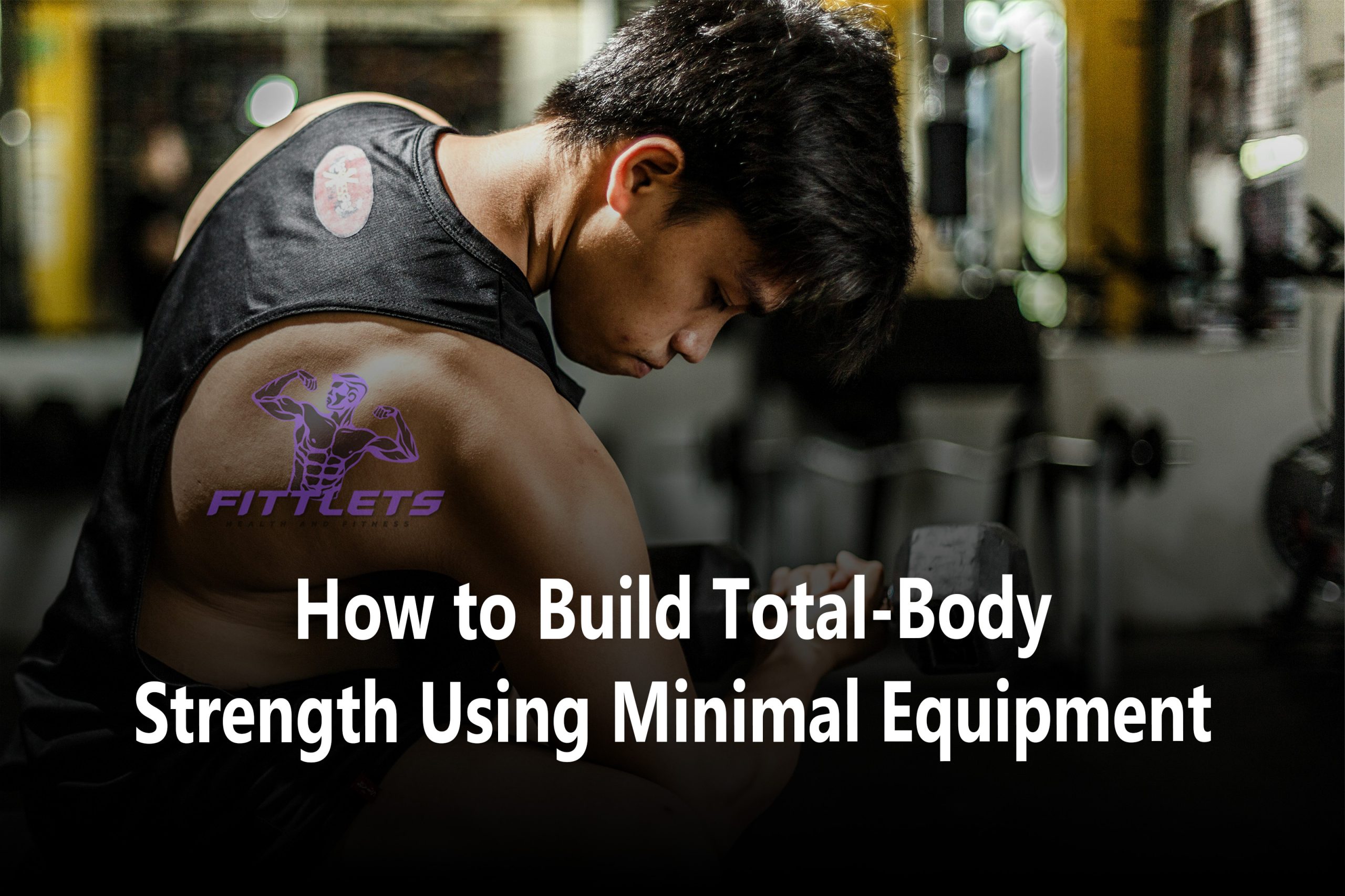
How to Build Total-Body Strength Using Minimal Equipment
Building serious strength doesn’t require a commercial gym membership, fancy machines, or a garage full of equipment. While high-end gyms offer variety, they are not a requirement for building muscle, increasing power, or improving overall athleticism.
In fact, training with minimal equipment can often produce better long-term results because it forces focus, control, and intelligent programming.
If you have access to a pair of dumbbells, a kettlebell, resistance bands, or even just your bodyweight, you already have everything you need to build total-body strength.
This guide explains exactly how to do it—effectively, efficiently, and sustainably.
What Total-Body Strength Really Means
Total-body strength is not about isolated muscle size. It’s about building balanced strength across all major movement patterns so your body functions efficiently as a unit.
True total-body strength includes:
Lower-body pushing strength
Hip hinging power
Upper-body pushing ability
Upper-body pulling strength
Core stability and anti-rotation control
Grip strength and load-bearing capacity
When these systems develop together, you move better, lift heavier, reduce injury risk, and improve daily performance.
You don’t need machines to train these patterns. You need smart movement selection.
Why Minimal Equipment Training Works
Muscles respond to tension, not equipment type.
Strength is created through mechanical tension, progressive overload, and consistent stimulus. Whether resistance comes from a barbell or a single dumbbell doesn’t matter physiologically.
Minimal equipment training works because it:
Improves movement quality
Enhances stability and coordination
Forces better mind-muscle connection
Reduces reliance on machines
Encourages creative progression
Often, less equipment leads to more intentional training.
The Essential Equipment (Optional but Powerful)
While bodyweight alone can build strength, a few simple tools dramatically expand your options.
Dumbbells
Dumbbells are arguably the most versatile strength tool. They allow unilateral training, greater range of motion, and better muscle balance.
Kettlebells
Kettlebells challenge coordination and power due to their unique weight distribution. They are excellent for hip-driven movements and explosive strength.
Resistance Bands
Bands provide constant tension and joint-friendly resistance. They’re ideal for glute work, shoulder stability, and adding intensity without heavy loads.
Even one of these tools is enough to build a complete program.
The Six Foundational Movement Patterns
To build total-body strength, structure your training around these six patterns:
1. Squat
Examples: Goblet squats, bodyweight squats, split squats
Targets: Quads, glutes, core
2. Hinge
Examples: Romanian deadlifts, kettlebell swings, glute bridges
Targets: Hamstrings, glutes, lower back
3. Push
Examples: Push-ups, dumbbell presses, overhead presses
Targets: Chest, shoulders, triceps
4. Pull
Examples: Dumbbell rows, band rows, pull-ups
Targets: Back, biceps, rear shoulders
5. Carry
Examples: Farmer’s carries, suitcase carries
Targets: Core, grip, shoulders
6. Core Stability
Examples: Planks, side planks, dead bugs
Targets: Deep core stabilizers
Train these consistently and you’ll build real total-body strength.
Progressive Overload Without Heavy Weights
Many people assume strength requires heavy barbells. That’s not true.
You can apply progressive overload by:
Increasing reps
Slowing tempo
Adding pauses
Reducing rest time
Increasing range of motion
Performing unilateral variations
Increasing total sets
For example, a slow 3-second lowering phase during squats significantly increases muscle tension.
Progress is about challenge—not just weight.
The Power of Unilateral Training
Single-arm and single-leg exercises are extremely effective when equipment is limited.
Benefits include:
Improved balance
Reduced muscle imbalances
Greater core activation
Increased intensity with lighter loads
A Bulgarian split squat with a moderate dumbbell can challenge you more than a heavy bilateral squat.
Unilateral training multiplies the effectiveness of minimal equipment.
Sample Total-Body Strength Workout (Minimal Equipment)
Here’s an example of a balanced session:
Goblet Squats – 3–4 sets
Dumbbell Romanian Deadlifts – 3–4 sets
Push-Ups or Dumbbell Press – 3 sets
One-Arm Dumbbell Rows – 3 sets each side
Reverse Lunges – 3 sets
Farmer’s Carry – 3 rounds
This structure trains every major movement pattern in one efficient workout.
Perform this 3–4 times per week with progressive overload for consistent gains.
How Often Should You Train?
For most people:
3 days per week = steady progress
4 days per week = faster strength gains
2 days per week = maintenance
Rest days are essential. Strength improves during recovery—not just during training.
Building Muscle With Minimal Equipment
Muscle growth depends on three key factors:
Mechanical tension
Adequate volume
Proper nutrition
You can stimulate hypertrophy with moderate loads if you train close to muscular fatigue.
Controlled reps, full range of motion, and focused effort create powerful growth signals—even without heavy weights.
Conditioning + Strength Combined
Minimal equipment allows seamless blending of strength and conditioning.
Examples:
Kettlebell swings
Dumbbell thrusters
Complexes (multiple exercises without setting weight down)
Timed circuits
These methods build cardiovascular endurance while maintaining strength development.
Efficiency improves when workouts serve multiple purposes.
Avoiding Common Mistakes
Minimal equipment training can fail if structure is missing.
Avoid these errors:
Repeating the same workout without progression
Ignoring pulling movements
Skipping warm-ups
Training randomly without a plan
Not tracking performance
Structure transforms simple tools into powerful results.
Warm-Ups and Mobility Matter
Even short workouts need preparation.
A 5–8 minute warm-up including:
Dynamic lunges
Arm circles
Hip hinges
Light band work
Improves activation, mobility, and strength output.
Proper preparation reduces injury risk and enhances performance.
Tracking Progress at Home
Without machines or heavy weights, tracking becomes even more important.
Measure:
Reps completed
Weight used
Tempo control
Rest time
Balance improvement
Range of motion
Progress isn’t always heavier weight. Sometimes it’s better control and endurance.
Nutrition Supports Strength
Minimal equipment doesn’t mean minimal recovery needs.
To build strength:
Eat sufficient protein
Avoid severe calorie restriction
Stay hydrated
Prioritize sleep
Training stimulus + nutrition + recovery = growth.
Mental Benefits of Minimal Equipment Training
Training with fewer tools builds discipline and confidence.
You rely less on machines and more on body awareness. You learn to focus on movement quality and internal effort rather than external validation.
This often improves long-term adherence and reduces intimidation.
Simplicity builds mastery.
How Long Until You See Results?
Strength gains often appear within 2–4 weeks for beginners.
Muscle definition changes typically show within 6–12 weeks with consistent effort and nutrition.
Minimal equipment does not limit results. Lack of progression does.
Long-Term Sustainability
Minimal equipment removes barriers.
No commute.
No waiting for machines.
No expensive memberships.
When workouts are convenient, consistency increases. And consistency drives transformation.
Fitness works best when it integrates into your life—not competes with it.
Final Thoughts
You don’t need complicated machines or massive weights to build total-body strength.
You need:
Foundational movement patterns
Progressive overload
Consistency
Smart recovery
With dumbbells, kettlebells, resistance bands, or just bodyweight, you can build serious strength, improve athleticism, and enhance overall health.
The secret isn’t having more equipment.
It’s using what you have—intentionally.