
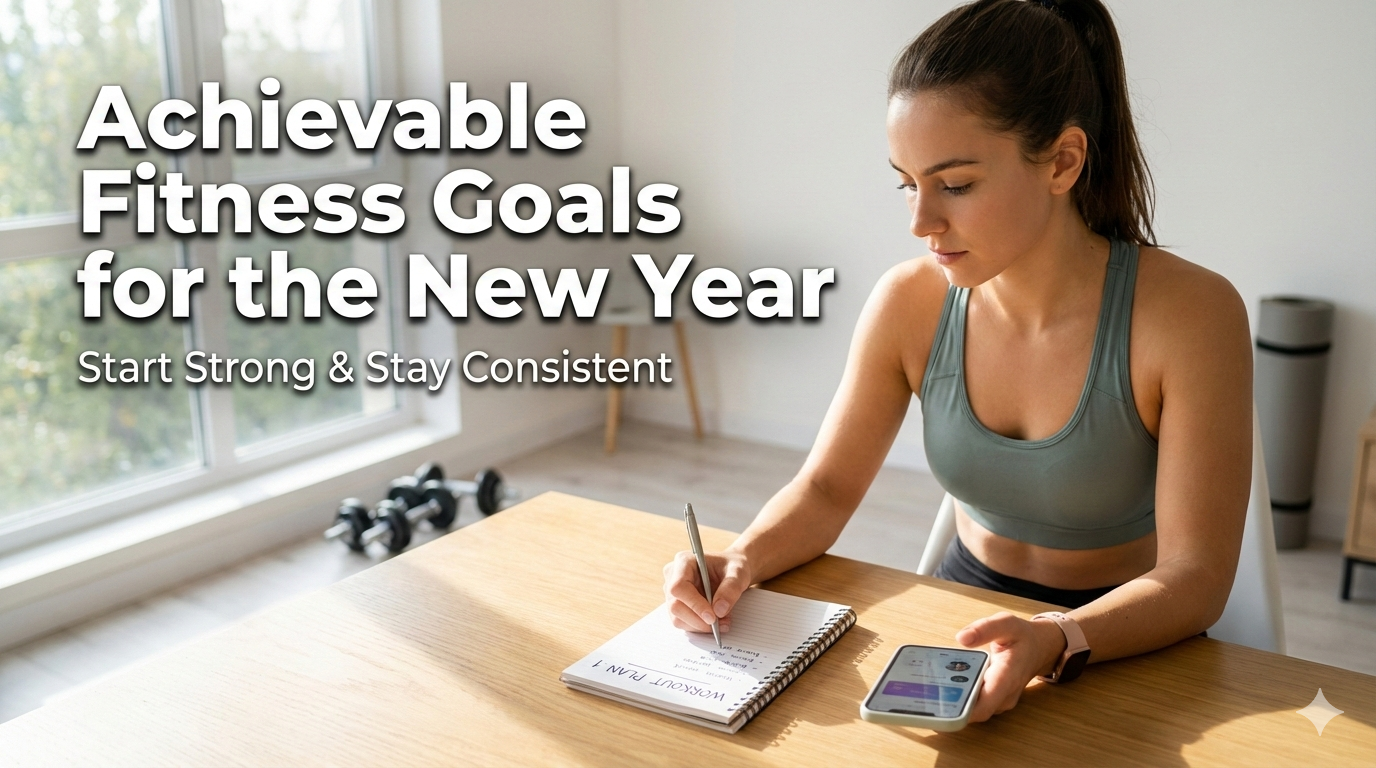
How to Set Achievable Fitness Goals for the New Year 2026
The New Year is the perfect time to focus on health and fitness, but many people fail because they set unrealistic goals. Achievable fitness goals help you stay motivated, consistent, and successful throughout the year. This guide will show you how to set realistic fitness goals that fit your lifestyle and lead to long-term results.
1. Start with a Clear Purpose
Before setting goals, understand why you want to get fit.
Your reason might be:
Weight loss
Muscle building
Better energy
Stress reduction
Overall health
A clear purpose keeps you focused when motivation drops.
2. Be Honest About Your Current Fitness Level
Set goals based on where you are now—not where you wish you were.
Ask yourself:
Am I a beginner or intermediate?
How much time can I realistically give?
Do I prefer home workouts or gym workouts?
Honesty prevents burnout and injuries.
3. Use the SMART Goal Method
SMART goals increase success rates:
Specific: “I will exercise 4 days a week.”
Measurable: Track reps, weight, or time.
Achievable: Goals should challenge, not overwhelm.
Relevant: Aligned with your lifestyle.
Time-bound: Set deadlines like 30, 60, or 90 days.
4. Break Big Goals into Small Milestones
Big goals feel overwhelming. Break them into smaller steps:
Lose 1–2 kg per month
Add 5 more push-ups every two weeks
Increase walking time weekly
Small wins build confidence and consistency.
5. Focus on Habits, Not Just Results
Instead of only chasing outcomes, focus on habits:
Daily movement
Drinking more water
Sleeping on time
Stretching regularly
Good habits naturally lead to results.
6. Create a Simple Workout Schedule
Plan workouts that fit your routine:
3–5 workout days per week
Short but effective sessions
Fixed timings
Consistency matters more than long workouts.
7. Balance Fitness with Nutrition
Fitness goals work best with proper nutrition:
Eat balanced meals
Increase protein intake
Reduce junk food
Stay hydrated
You don’t need extreme dieting—just smarter choices.
8. Track Your Progress Regularly
Tracking keeps you motivated. Monitor:
Body weight
Measurements
Strength gains
Energy levels
Seeing progress encourages you to stay committed.
9. Prepare for Setbacks
Missed workouts or bad weeks are normal.
Instead of quitting:
Adjust your plan
Restart the next day
Stay flexible
Progress is about consistency, not perfection.
Review and Adjust Your Goals
Every 4–6 weeks, review your fitness goals to ensure you are moving in the right direction. Analyze what’s working well, identify what needs improvement, and decide whether your goals should be adjusted, upgraded, or simplified. As your fitness level changes, your goals should evolve too. Regularly reviewing and refining your goals keeps them realistic, achievable, and aligned with long-term success.